Surgeon Admits Doctors Are Looking at Death the Wrong Way — Atul Gawande on End-of-Life Care

Surgeon Admits Doctors Are Looking at Death the Wrong Way — Atul Gawande on End-of-Life Care

August 09, 20263 min read

Surgeon Admits Doctors are Looking at Death the Wrong Way

JULIA Blogs Atul Gawande, doctors on dying

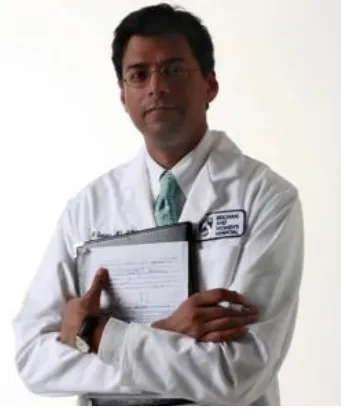
Atul Gawande, a surgeon at Brigham and Women’s Hospital in Boston and professor of surgery and public health at Harvard.

His latest book is entitled: Being Mortal: Illness, Medicine and What Matters in the End.

In a recent interview with surgeon Atul Gawande, he admits that medicine has its priorities wrong in the way it treats patients in end-stage care. Gawande states “I never felt I had good answers for people who were facing death; when do we push ahead with treatments and when do we not? It wasn’t until I connected with experts working in palliative care that I began to gain a sense of how you can unravel these problems.” He notes that the biggest struggle with his nursing home patients is with things being taken away from them in the name of health and safety. As an example he sites Alzheimer’s patients who are desperate for a cookie, but are given only pureed food for fear of them choking. In the name of health, their lives are impoverished. The medical focus on health and safety ignores what individuals might regard as their most important priorities. A cookie can sometimes go a long way in restoring a sense of well-being.

Gawande sees the medicalization of death as an experiment that is failing on multiple levels. One is the enormous suffering people in old-age homes and intensive care units go through. Another is the fact that to medical personnel, you are a stranger when you enter one of these institutions. The most important thing about you is what’s wrong with your physical condition, your disease, your disorders, your mental or physical disabilities.

Gawande has come to the conclusion that when a terminally ill person is faced with difficult decisions, such as whether to go through with an operation or not, whether to continue chemotherapy or not, that medical caregivers, family, and, when possible, the patient need to have “powerful conversations” about what well-being means to that person. He says that doctors need to “Ask those questions, hear [the patient’s] answers, use them to make plans, and then understand that they will change and you will have to ask the questions again in a few weeks.” Although a patient may not be in any condition to answer more than one of those questions, it would still be a lot more than doctors offer now.

Gawande is not in favor of assisted dying because the “goal shouldn’t be to have a good death but to have as good a life as possible, all the way to the end…[I]t troubles me that we have focused on assisted dying without having figured out assisted living well.” This is a surprisingly good point, in my opinion.

When asked what he would choose were he in a terminal condition, he discriminates between afflictions of the body and the brain. “Right now, I’d say that if my body went I would still want to be alive, but if my brain went, let me go.” He does recognize that as death draws nearer, his decisions will undoubtedly change. It is his championing of ongoing decision-making processes and reevaluations that is truly reformist in medical thinking as well as his consideration of what is psychologically important to each individual patient, regardless of whether or not a patient’s need is healthy or safe according to current medical standards.

Gawande is an Ivy-League mainstream physician who is calling for a difference in end-stage treatment. Hopefully, in the near future medical teams will learn to treat the terminally ill, not as diseases and failures, but as human beings.

From Science Magazine, Oct 18, 2014: 30-31. Interview by Linda Geddes

2
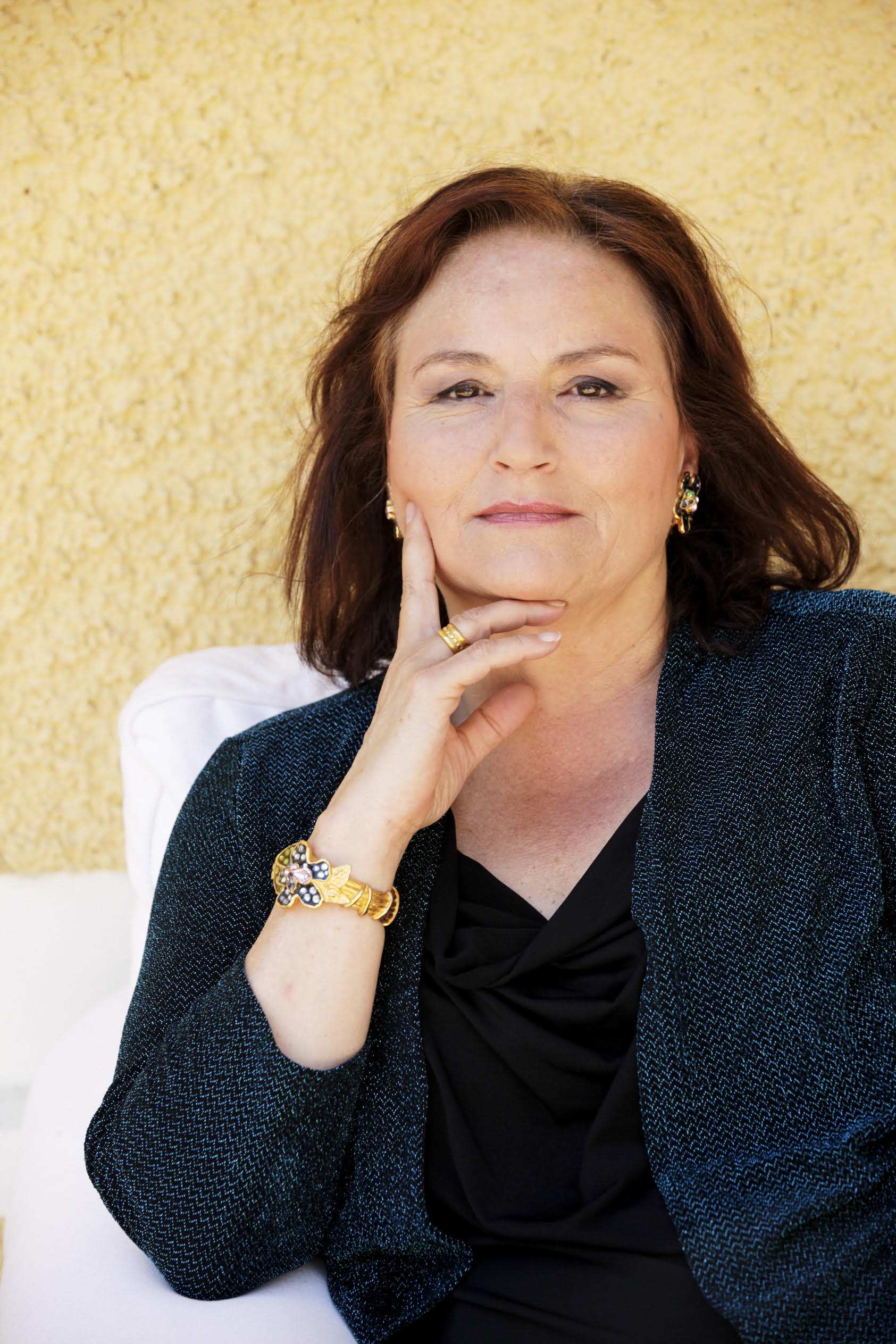
Julia Assante, PhD

Julia Assante, PhD

Dr. Julia Assante has been an active medium, life reader and medical intuitive since 1977. She was tested at Columbia University (1981) for telepathy and remote viewing under scientifically controlled conditions. Her accuracy scores were so high above other professional psychics that the researchers created a category for her alone. She is regarded as outstanding within the field of parapsychology. Julia is also the author of The Last Frontier: Exploring the Afterlife and Transforming Our Fear of Death. Her book won the Nautilus Gold Award for the category of death, dying and grief. Publisher’s Weekly called it “… the most important book on the enigma of death since the ground-breaking work of Elisabeth Kübler-Ross.” Her book was endorsed by such stellar authors as Deepak Chopra, Larry Dossey and Dean Radin, among others. In The Last Frontier, Julia draws primarily on her own amazing experiences as an active professional intuitive for 47 years. Her strong academic background (Columbia University and Yale) allowed her to include her ground-breaking exploration of the various historical constructions of the afterlife, from ancient Egypt and Mesopotamia to the present. Her book also includes consciousness research, physics, quantum biology, and parapsychology, studies of Near-Death Experiences and Nearing Death Awareness. She also uses the records of past-life therapists, of which she is one, of medical personnel and bereavement counselors. Her book further supports survival after death by including some of the best testaments of the many thousands of people who have experienced communication with the dead. Many readers have called The Last Frontier the Bible of life after death. During the last 47 years, Julia has given private sessions and workshops in English and German, in the US and Europe on remote viewing, healing and medical intuition, after death communication, and recalling past and future incarnations. Furthermore, she has appeared on the TV program “Meine letzte Chance” (“My Last Chance)” which has helped people lead healthier lives. She has also given numerous talks and interviews on topics such as after-death communication, end-of-life research, mediumship, and spiritual transformation. As a certified regression / Past-Life therapist, she has helped many individuals on their profound journeys of self-discovery, which often leads to physical healing from even such dangerous diseases as cancer. Her greatest achievement, however, is the Percy Project in which she scientifically proves the survival of life after death using technology. The result of her last trials were extraordinary, without a single failure but with many mind-boggling surprises. She hopes to continue trials in Vienna soon. For more on this, see The Percy Project on this website. Academically, Julia is an established archaeologist and social historian of the ancient Near East, including ancient Mesopotamia, Egypt and Greece. She was awarded a PhD by Columbia, but also studied at She taught at Columbia, Bryn Mawr and the University of Münster and has given talks at major universities in the United States and Europe. Her numerous, often revolutionary, scholarly articles (see Academia.edu) continue to influence research on the ancient Near East as well as biblical and Greco-Roman studies. Julia has led a multicultural life. She has lived in the US but also in France, Italy, Germany, Austria and China. She has also studied seven languages, including three cuneiform ones. Today, she lives a quieter life with her partner, dividing her time between Austria and France. Even in retirement, she continues to share her knowledge through talks, interviews and writing, to inspire a new generation to be aware of the next step–nonlocal multidimensional universes! It’s going to be fun!

Instagram logo icon
Youtube logo icon
Back to Blog